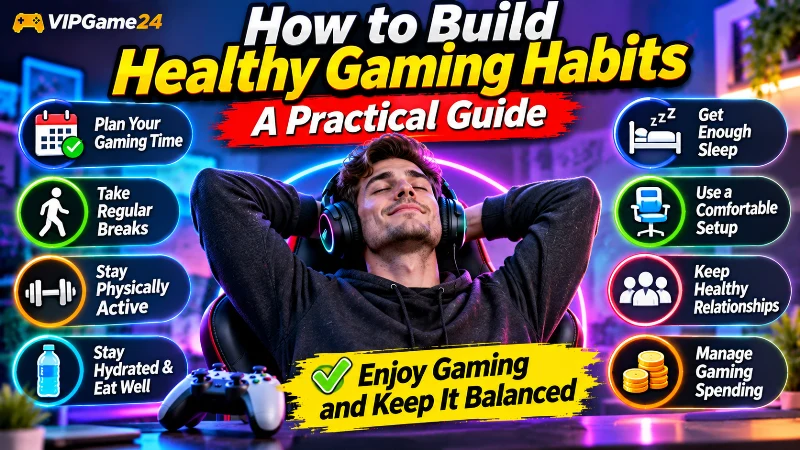
Gaming can be an enjoyable way to relax, explore new worlds, compete with friends and spend time with a community. Whether you play on a PC, console or mobile device, a good gaming routine can help you enjoy your favourite games while keeping other parts of daily life in balance.
Building healthy gaming habits does not mean giving up gaming or avoiding long gaming sessions altogether. It means paying attention to your time, taking suitable breaks, getting enough sleep, staying physically active and recognizing when gaming is interfering with other responsibilities.
This guide covers practical ways to build a balanced gaming routine, improve your gaming environment, manage screen time, maintain healthy sleep habits and recognize situations where you may need additional support.
What Are Healthy Gaming Habits?
Healthy gaming habits are routines that allow you to enjoy video games without consistently neglecting sleep, physical activity, education, work, relationships or other important responsibilities.
A balanced gaming routine may include:
- Setting reasonable gaming times around your daily responsibilities.
- Taking regular breaks from sitting and looking at a screen.
- Getting enough sleep and avoiding late-night gaming that disrupts rest.
- Making time for physical activities outside gaming.
- Eating regular meals and drinking enough water.
- Maintaining healthy relationships with family and friends.
- Managing online interactions and gaming-related spending.
- Recognizing when gaming is becoming difficult to control.
There is no single gaming schedule that suits everyone. Your routine should reflect your age, responsibilities, sleep needs, health and personal circumstances.
Why Balance Matters When Playing Video Games
Gaming can be a valuable recreational activity, but spending too much time playing without considering other needs may create problems.
Protect time for everyday responsibilities
Gaming sessions can sometimes continue longer than expected, particularly when a game includes ranked matches, multiplayer events or lengthy missions.
Planning your gaming time helps prevent it from regularly interfering with important activities such as:
- School, college or professional work.
- Household responsibilities.
- Meals and personal care.
- Exercise and outdoor activities.
- Time with family and friends.
- Rest and sleep.
Maintain a consistent sleep routine
Late-night matches and long gaming sessions can make it tempting to postpone bedtime. Regularly sacrificing sleep for gaming can affect how you feel and function the following day.
Establishing a reasonable stopping time makes it easier to protect your normal sleep schedule.
Include movement throughout the day
Gaming often involves sitting in one position for extended periods. Regular movement and other physical activities help balance time spent at a desk or on a sofa.
Keep gaming enjoyable
Gaming should remain an enjoyable activity rather than a constant source of pressure. Taking breaks, changing activities and avoiding unnecessary competition can help you maintain a healthier relationship with your favourite games.
Set a Gaming Schedule That Fits Your Daily Routine
One of the simplest ways to develop healthy gaming habits is to decide when you will play before starting a session.
Finish important responsibilities first
Whenever possible, complete essential activities before starting a gaming session.
For students, this might mean completing homework before playing. For working adults, it might mean finishing important work and household tasks.
Gaming becomes easier to enjoy when you are not constantly worrying about something you have postponed.
Decide when your session will end
Set a realistic stopping time before launching the game. You can use a phone alarm, timer or reminder to help you remember.
For competitive games, consider using the end of a match as your stopping point rather than beginning another match automatically.
Use natural stopping points
Some games make it difficult to stop immediately. Story missions, multiplayer rounds and timed events may require you to finish a particular activity.
Identify suitable stopping points before beginning the next major activity. Avoid starting a lengthy mission when you have very little time available.
Do not copy another player’s schedule
Professional gamers, streamers and competitive players may follow demanding training schedules. Their routines may involve planned practice sessions, coaching and dedicated recovery time.
That does not mean the same schedule is suitable for someone who plays for entertainment. Build a routine around your own responsibilities and needs.
Take Regular Breaks During Gaming Sessions
Long periods of sitting and looking at a screen can make it easy to forget about movement and rest. Taking short breaks gives you an opportunity to change position and step away from the game.
Stand up and move around
During breaks, try activities such as:
- Walking around your room.
- Standing and stretching comfortably.
- Getting a glass of water.
- Moving your shoulders and changing posture.
- Taking a short walk outside.
Even a brief change of activity can help break up a long period of sitting.
Try a practical break routine
You could begin with a reminder to take a short break approximately once an hour. For example, some workstation guidance suggests short breaks of 5 to 10 minutes every hour rather than taking one long break after several hours.
This is a practical starting point, not a universal medical rule for gaming. Adjust your breaks according to your comfort, activity and individual needs.
Do not wait until you feel uncomfortable
Try to change position and move regularly instead of waiting until your back, neck or shoulders feel uncomfortable.
Choose break reminders that fit your gaming style. A reminder between matches may be more convenient than interrupting an important competitive round.
Protect Your Sleep While Gaming
Sleep is an important part of a balanced routine. Long gaming sessions can interfere with bedtime when you continue playing later than planned.
Understand how much sleep you need
Sleep recommendations depend on age. According to the US Centers for Disease Control and Prevention (CDC), the general daily recommendations include:
| Age group | Recommended sleep |
|---|---|
| Children aged 6–12 | 9–12 hours |
| Teenagers aged 13–17 | 8–10 hours |
| Adults aged 18–60 | At least 7 hours |
| Adults aged 61–64 | 7–9 hours |
| Adults aged 65 and older | 7–8 hours |
These are general recommendations. Individual sleep needs can vary.
Set a stopping time before bedtime
Choose a time when you stop gaming so that you can prepare for sleep without rushing.
Avoid beginning long matches or missions shortly before bedtime. Give yourself enough time to finish the session and follow your usual evening routine.
Reduce screen use before sleeping
The CDC recommends turning off electronic devices at least 30 minutes before bedtime as part of healthy sleep habits.
Consider using that time for reading, listening to relaxing audio or preparing for the following day.
Keep a consistent sleep schedule
Try to maintain reasonably consistent bedtimes and waking times, including weekends. Avoid repeatedly staying awake late because you want to finish one more match.
For more information, read the CDC guide to sleep and healthy sleep habits.
Balance Gaming With Physical Activity
Gaming usually involves less physical movement than activities such as walking, cycling or playing sports. Making time for movement outside gaming helps create a more balanced daily routine.
Include enjoyable physical activities
You do not need a complicated fitness programme to start moving more. Consider activities you enjoy, such as:
- Walking or cycling.
- Playing football, cricket or basketball.
- Swimming.
- Dancing.
- Stretching or suitable exercise routines.
- Outdoor games with friends or family.
Understand general adult activity recommendations
For adults, the CDC recommends at least 150 minutes of moderate-intensity physical activity each week, along with muscle-strengthening activities on at least two days.
This is a general physical activity guideline, not a gaming-specific requirement. Start with activities that are appropriate for your fitness and circumstances.
Break up long periods of sitting
Instead of spending the entire day sitting at your gaming setup, make opportunities to stand, walk and change activities.
You can also combine gaming days with outdoor activities or other hobbies that involve movement.
Choose realistic activity goals
Do not try to change your entire routine overnight. Begin by adding a short walk or another enjoyable activity to your day.
Gradually develop a routine that you can maintain.
For details, see the CDC physical activity guidelines for adults.
Create a Comfortable Gaming Setup
Your gaming environment influences how comfortably you can play. A well-arranged setup can make long sessions more manageable and reduce unnecessary strain from poor positioning.
Adjust your chair and sitting position
Choose a stable chair that supports a comfortable sitting position.
As practical setup suggestions:
- Keep your feet supported by the floor or a suitable footrest.
- Adjust the chair so your shoulders can relax.
- Keep your elbows reasonably close to your body.
- Avoid leaning forward for long periods.
- Change position periodically instead of remaining rigid.
You do not need an expensive gaming chair to create a usable setup. A suitable chair and sensible positioning are more important than decorative features.
Position your monitor comfortably
Place your screen at a distance and height that allow you to view it comfortably without repeatedly leaning forward.
Keep the screen at a comfortable angle and adjust brightness to suit the surrounding lighting.
Use suitable lighting
Avoid playing in a completely dark room with a very bright monitor when that makes viewing uncomfortable.
Use balanced room lighting and adjust your display brightness to the environment.
Organize your keyboard, mouse and controller
Keep your input devices within a comfortable reach. Avoid twisting your arms or repeatedly stretching to reach a keyboard, mouse or controller.
Move equipment to a position that feels natural for your preferred gaming style.
Keep your gaming area organized
Remove unnecessary clutter around your desk and ensure cables do not create tripping hazards.
A clean setup also makes it easier to maintain and troubleshoot your equipment.
Stay Hydrated and Maintain Regular Meals
Long gaming sessions can sometimes make players forget ordinary daily routines, including drinking water and eating at appropriate times.
Keep water within reach
Having water nearby makes it easier to drink during breaks. Remember to refill your bottle when necessary.
Your fluid needs depend on factors such as activity, weather and individual circumstances. Do not treat a single fixed amount as appropriate for everyone.
Do not replace meals with gaming snacks
Snacks can be convenient while gaming, but they should not regularly replace balanced meals.
Make time for normal meals and include a variety of foods that suit your dietary needs.
Keep food and drinks away from electronics
Place drinks securely and avoid positioning containers where they can spill onto your keyboard, controller or computer.
Clean your gaming area regularly to prevent food crumbs and dirt from building up around your equipment.
Manage Competitive Gaming and Emotional Pressure
Competitive games can be exciting, but repeated losses, difficult rankings and online arguments can sometimes make gaming stressful.
Recognize when frustration is affecting your session
Notice how you respond when a game becomes difficult.
Possible signs that you need a break include:
- Becoming increasingly angry after repeated losses.
- Continuing matches only because you want to recover your ranking.
- Arguing with teammates or other players.
- Finding it difficult to concentrate.
- Feeling unable to stop even when you no longer enjoy playing.
Take a break after repeated frustrating matches
Instead of immediately entering another match, step away for a while. Return when you feel ready to enjoy the game again.
Set realistic competitive goals
Rankings and statistics can be interesting measures of progress, but they should not determine your entire gaming experience.
Focus on improving specific skills rather than expecting to win every match.
Keep friendly competition in perspective
Remember that other players may have different experience levels, equipment and available practice time.
Compare your progress with your own previous performance rather than treating every match as a measure of personal worth.
Maintain Healthy Online Gaming Relationships
Many games include multiplayer communities, voice chat and social features. These can be enjoyable ways to communicate with other players, but it is important to maintain reasonable boundaries.
Communicate respectfully
Be respectful towards teammates and opponents. Avoid personal attacks, harassment and arguments that turn an enjoyable match into an unpleasant experience.
Use mute, block and reporting tools
If another player repeatedly sends abusive messages or disrupts your experience, use the available moderation tools.
You can mute unwanted communication, block accounts or report behaviour that violates the game’s rules.
Protect your personal information
Do not share passwords, verification codes, banking details or private account information with strangers.
Be careful when clicking unknown links sent through game chats or community messages.
Keep offline relationships important
Online gaming can be social, but it should not regularly replace every opportunity to spend time with family, friends and other people in your life.
Make time for conversations and activities outside gaming.
Control Gaming-Related Spending
Many games include optional purchases, cosmetic items, subscriptions and digital currencies. Managing these expenses is another part of maintaining balanced gaming habits.
Set a gaming budget
Decide how much you can comfortably spend on games and related purchases without affecting necessary expenses.
Keep entertainment spending separate from money needed for food, bills, education or other responsibilities.
Understand in-game purchases
Before buying an item, check whether it is a permanent purchase, subscription or limited-time offer.
Read the purchase details carefully, especially when the game uses virtual currency or recurring payments.
Avoid impulse purchases
Limited-time offers can create pressure to spend quickly. Give yourself time to decide whether an item is genuinely worth buying.
Do not spend money simply because friends or other players have purchased the same item.
Use parental controls where appropriate
Families can use available platform and device settings to manage purchase permissions, spending limits and account access for younger players.
Parents and guardians should explain these settings and help children understand digital purchases.
Recognize When Gaming May Be Becoming a Problem
Enjoying video games frequently does not automatically mean someone has a gaming problem. Many people play regularly while maintaining their work, education, relationships and other activities.
However, it is important to recognize patterns that may indicate gaming is becoming difficult to control.
Notice changes in everyday responsibilities
Pay attention if gaming repeatedly leads to:
- Missing school, work or important appointments.
- Neglecting meals, sleep or personal care.
- Frequently cancelling social activities.
- Difficulty stopping even when you intend to finish.
- Continuing to play despite serious negative consequences.
- Repeated conflict with family or friends about gaming.
Understand the WHO definition of gaming disorder
The World Health Organization includes gaming disorder in its International Classification of Diseases (ICD-11).
It describes a pattern involving:
- Impaired control over gaming.
- Increasing priority given to gaming over other interests and daily activities.
- Continuing or escalating gaming despite negative consequences.
For a diagnosis, the behaviour must cause significant impairment in important areas of life, such as personal, family, social, educational or occupational functioning. The pattern would normally have been evident for at least 12 months.
WHO also notes that gaming disorder affects only a small proportion of people who engage in gaming. Frequent gaming by itself does not establish a diagnosis.
Seek appropriate support when necessary
If gaming is seriously affecting your daily life or you repeatedly feel unable to control it, consider speaking with a qualified healthcare professional or mental health professional.
Do not attempt to diagnose yourself based only on the number of hours you play. A qualified professional can help assess the wider situation.
Read the WHO explanation of gaming disorder for more information.
A Practical Daily Routine for Balanced Gaming
A routine does not need to be complicated. The example below shows how gaming can fit around everyday responsibilities.
| Part of the day | Suggested activity |
|---|---|
| Morning | Wake up, eat breakfast and prepare for daily responsibilities. |
| Daytime | Focus on school, work, household activities or other commitments. |
| Afternoon | Take time for physical activity, meals and personal activities. |
| Evening | Enjoy a planned gaming session with suitable breaks. |
| Before bedtime | Finish gaming, reduce screen use and prepare for sleep. |
This is an illustrative routine, not a fixed schedule. Adjust it to your work or school timetable, age, sleep requirements and personal circumstances.
Healthy Gaming Habits Checklist
Use this checklist to review your daily gaming routine:
- Have I completed my important responsibilities?
- Have I decided when my gaming session will end?
- Am I taking regular breaks from sitting?
- Have I made time for physical activity?
- Am I getting enough sleep?
- Have I eaten regular meals and had enough water?
- Is my gaming setup comfortable?
- Am I enjoying the game rather than playing out of pressure?
- Am I managing online interactions respectfully?
- Am I keeping gaming purchases within my budget?
- Am I maintaining time for relationships and other interests?
Common Healthy Gaming Mistakes to Avoid
Playing without a stopping point
Starting another match or mission automatically can make sessions longer than intended. Decide when to stop before beginning the next activity.
Ignoring breaks during competitive matches
Long competitive sessions can make players forget about movement and rest. Use natural breaks between matches to stand up and change position.
Sacrificing sleep to complete missions
Do not repeatedly postpone bedtime because of a game objective. Save your progress where possible and continue another day.
Using gaming as the only recreational activity
Explore other interests as well. Reading, sports, music, outdoor activities and social events can add variety to your routine.
Comparing your schedule with professional gamers
Professional players often have structured training, coaching and recovery arrangements. Their schedules are not necessarily suitable for casual players.
Assuming gaming hours alone determine whether someone has a disorder
WHO’s criteria focus on impaired control, increasing priority and continuing despite negative consequences, together with significant impairment in important areas of life. The number of hours alone is not enough to diagnose gaming disorder.
Frequently Asked Questions
How can I develop healthy gaming habits?
Set a realistic gaming schedule, take regular breaks, protect your sleep, include physical activity and make time for everyday responsibilities. Review your routine regularly and adjust it when necessary.
How many hours of gaming per day are healthy?
There is no single daily gaming limit that is suitable for every person. Your age, responsibilities, sleep, physical activity and the effect gaming has on everyday life all matter. Focus on maintaining balance rather than relying on one universal number.
Should I take breaks while playing video games?
Yes. Regular breaks provide an opportunity to stand, move, stretch comfortably and change activities. A short break approximately every hour can be a practical starting point, although individual needs differ.
Does gaming before bedtime affect sleep?
Late-night gaming can delay bedtime and reduce the time available for sleep. Set a stopping time and follow a relaxing bedtime routine. The CDC recommends turning off electronic devices at least 30 minutes before bedtime.
Can I play video games every day?
Daily gaming is not automatically unhealthy. What matters is whether you can maintain your responsibilities, relationships, physical activity and sleep while enjoying your games.
Do I need an expensive gaming chair for healthy gaming?
No. You need a comfortable and suitable sitting arrangement. Adjust your chair and equipment to support a relaxed position, and remember to change posture and move regularly.
How can I avoid frustration during competitive gaming?
Set realistic goals, take breaks after frustrating matches and avoid treating every loss as a personal failure. Stop playing when you are no longer enjoying the experience.
What are signs that gaming is interfering with everyday life?
Possible warning signs include repeatedly missing responsibilities, neglecting sleep or meals, being unable to stop when intended and continuing to play despite serious negative consequences. Consider professional support if these patterns are affecting your life.
Is playing video games for many hours the same as gaming disorder?
No. Gaming disorder is defined by a wider pattern involving impaired control, increased priority over other activities and continued gaming despite negative consequences, together with significant impairment in everyday functioning. Time spent gaming alone does not establish the diagnosis.
Final Thoughts
Healthy gaming habits are about enjoying video games while maintaining a balanced daily routine. Plan your sessions, take regular breaks, protect your sleep and make time for physical activities and relationships outside gaming.
You do not need an expensive gaming setup or a complicated timetable to begin. Small changes, such as setting a stopping time, standing up regularly and avoiding late-night matches, can help make your routine more manageable.
Pay attention to how gaming affects your everyday responsibilities and wellbeing. If you notice persistent difficulties controlling your gaming or significant problems in other parts of life, consider speaking with a qualified professional.
The goal is simple: enjoy gaming as part of a balanced lifestyle, rather than allowing it to replace the other activities that matter to you.